

Alexandra Bailey
Head of Fujitsu UK Defence and National Security Business Group
In Ukraine, drone technology promises to become more sophisticated and interconnected, increasing the need for faster, more resilient computing power at the tactical edge.
On the frontlines in Ukraine, a highly monitored, densely drone-dominated area has changed the nature of warfare. Survival within this lethal and inhospitable landscape — estimated to be between 30 kilometres and 60 kilometres deep — has been made difficult, if not impossible.
That’s because drone technology has turned the area into a present-day ‘no-man’s land’ — a zone of absolute denial, where the slightest movement is immediately detected by ISR (Intelligence, Surveillance and Reconnaissance) from drones and met by precision drone strikes or artillery fire. Similarly, any technology that emits a radio frequency (RF) signal is instantly identified, triggering a kinetic response.
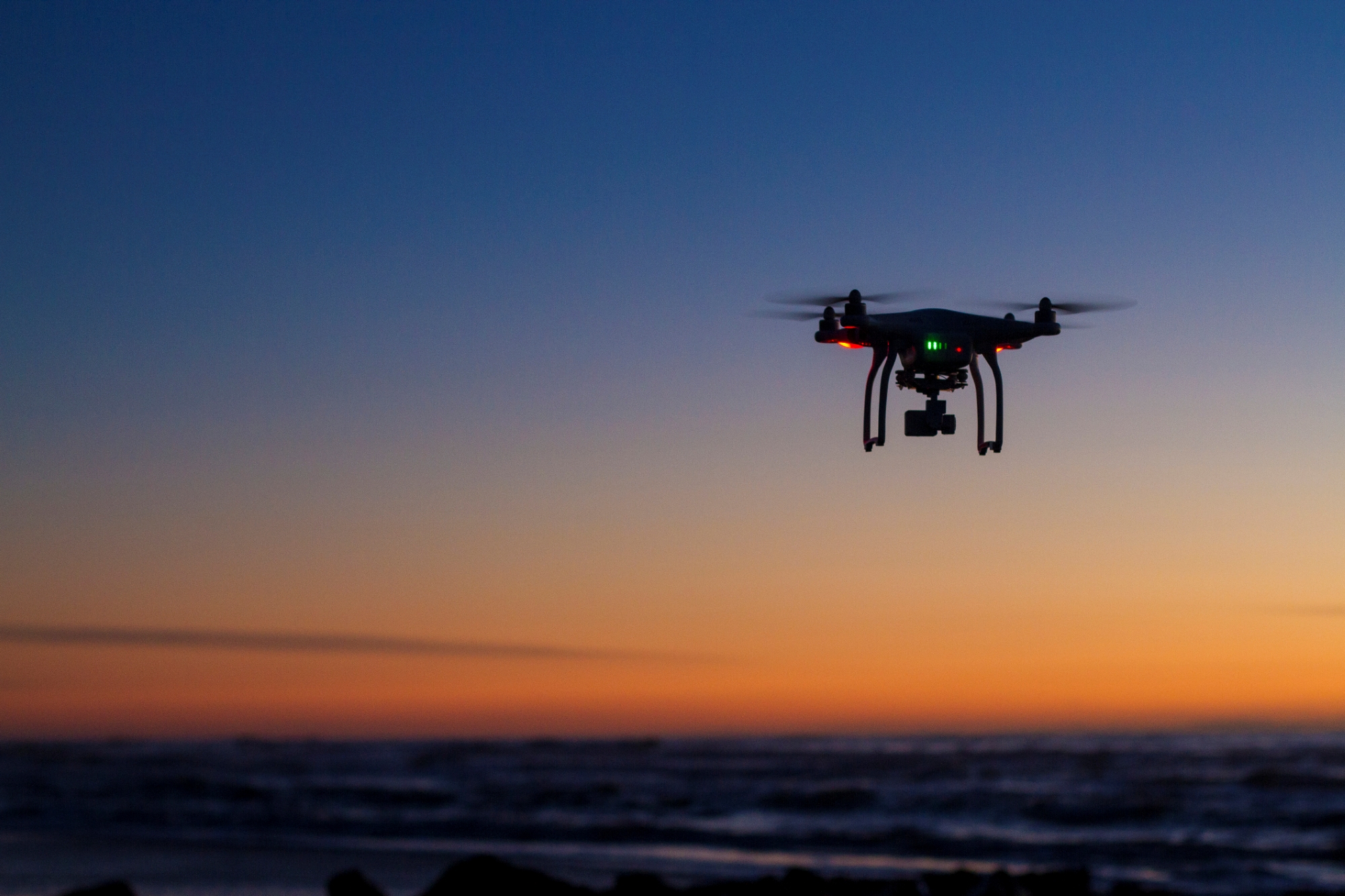
Off-the-shelf drone technology has transformed the ability to deny
“The Ukrainians have proved that the concept of ‘deep zone denial’ is highly effective,” explains Alexandra Bailey, Head of Defence, Fujitsu. “What’s more, the price of that denial is extremely cheap, because it can be achieved with easily available, consumer-grade, off-the-shelf drone technology.”
Yet this advantage can now be pressed further, notes Bailey. Currently, the drones monitoring this zone are First Person View (FPV), piloted by one person. For even greater effect, she believes that they’ll begin to be flown more dynamically.
In a swarm of drones, each unit can send, receive and process information for ‘sense and effect’ (ie sensing movement and then carrying out an operationally useful action to counter it). The drone can also process data itself, rather than sending information back to a central command centre. Soon, these separate drones will interact with each other, sharing data and intelligence in real-time to make zone monitoring even more effective.
However, in this interconnected future, centralised cloud infrastructure can be a liability at the tactical edge. “If decision-making is made in a single cloud, it creates an exceptional point of fragility,” says Bailey. “If it’s disrupted, it would prove catastrophic for the whole platform because everything would fail.”
Edge computing reduces or eliminates this risk with a distributed architecture that processes data closer to its source
Distributed edge computing enables tempo — not just resilience
Edge computing reduces or eliminates this risk with a distributed architecture that processes data closer to its source.“Many-to-many architecture is more resilient,” says Bailey. “Also, decentralised computing offers greater speed by reducing latency and enabling faster decision-making.” Plus, it has the potential to make drone swarms significantly more autonomous.
For innovations like these to thrive in this new defence environment, a different kind of relationship will be needed between the Ministry of Defence (MOD) and its digital suppliers.
First, to create a more resilient supply chain, the MOD will need to broaden its supply base. Secondly, short-term, single-use contracts will no longer be sufficient. Supplier partners must be prepared to provide the Ministry with long-term collaboration that supports evergreening and innovation.
“In the UK, we must invest in collaboration and innovation with digital partners, elevating relationships from tactical, contractual arrangements to true strategic partnerships focused on innovation and pace,” concludes Bailey.
