


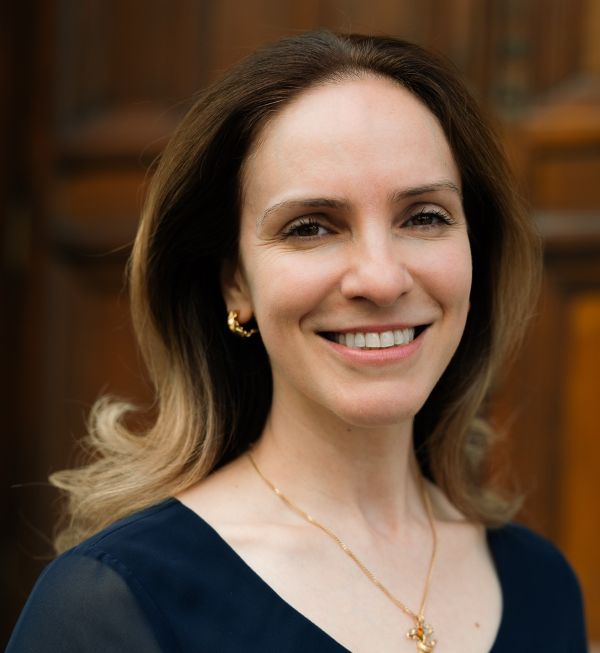
Emily Cloke
Chief Executive Officer, Creative UK
“I truly believe one of the biggest economic opportunities the UK has right now is around more investment in creativity,” says Emily Cloke, chief executive of an organisation advocating for UK creative industries.
Cloke – a former diplomat, lawyer and producer – is speaking less than two months into her leadership of Creative UK, the national membership body for the cultural and creative industries.
Promising growth
“Our sector is growing at five times1 the rate of the economy. The creative industries are worth more in GVA1 than aerospace, automotive, life sciences and oil and gas combined. My job is to do everything I can to make sure that opportunity is grasped with both hands – which means being a loud advocate for more investment and championing policies to support it at the national and regional level.”
It’s a role Cloke is passionate about. “All the research and data are clear,” she says, “More investment in this sector means more growth – economically, socially and culturally.”
“The creative industries are worth £145 billion in GVA2. One in ten UK businesses is creative, 3 and our own research, conducted with the Creative Policy and Evidence Centre, found that creative SMEs have a far higher appetite for growth than businesses in other sectors.”
I truly believe that investing in the creative economy means investing in a stronger future for the UK
Unlocking industry potential
“We want more investors to back the creative industries – and to understand there’s real opportunity in the sector.”
But how can Cloke be so sure? “Because Creative UK is the test case — we’re an investor ourselves. Over the last five years, we’ve distributed around £35 million into hundreds of creative businesses. “Take Creative Growth Finance – our flagship fund with Triodos Bank. This portfolio is twice as productive as the national average, and one in five businesses goes on to be acquired. 4 Month on month, we see growth.”
“We also have regional funds with strong returns. The North East Culture and Creative Investment Programme is delivered with the North East Combined Authority. So far, we’ve invested £3.5 million in over 50 companies.”
“What makes the sector’s growth special,” she adds, “is that it comes with tangible benefits. Creativity strengthens communities. It builds social cohesion and improves wellbeing. The creative economy, as we know it, is connected, dynamic and productive – built on unparalleled talent and untapped potential.”
Cloke is excited to work hard for the sector. “I’m here to be a champion for our members, partners and the businesses we work with,” she says. “I truly believe that investing in the creative economy means investing in a stronger future for the UK.”
[1] DCMS. (2026). DCMS sectors economic estimates gross value added 2024 (provisional). https://tinyurl.com/36uxkm39.
[2] DCMS. (2025). DCMS economic estimates: business demographics, 2025 – main report. https://tinyurl.com/pswv66rd.
[3] Apampa, L. (2025). Creative UK and Creative Industries Policy & Evidence Centre (Creative PEC) launch landmark report highlighting serious barriers to finance in creative industries. https://tinyurl.com/txf2vrbn.
[4] Creative UK. Creative growth finance portfolio. https://tinyurl.com/5bbywkpy.
