



Sarah McVittie
Co-Founder, Mapp Fashion
AI agents and search algorithms now control what fashion shoppers find, and most brands aren’t ready for it.
For decades, fashion retail operated on the premise that more traffic equals more revenue: drive shoppers to your site, convert at 2% to 4% and grow, that equation is no longer working.
New research(1) analysing 400 major fashion retailers across seven markets, covering 26 months of traffic and conversion data, finds that organic and direct search fell by seven percentage points. Paid traffic, meanwhile, has tripled. The cost of staying visible is rising, and for many brands, returns are diminishing.
The research cross-references traffic data with the financial performance of over 80 publicly quoted retailers.
8% threshold
According to the data, when paid traffic exceeds 8% of total traffic, outcomes diverge sharply. Some brands at or above that level are using paid media to amplify a strong brand identity, and they’re growing.
Others are spending heavily to mask a deeper structural problem. Their brand isn’t differentiated enough for shoppers or for AI systems to seek them out (a 1.5 percentage point reduction in operating margin compared to structural leaders). That distinction matters because AI-driven discovery is accelerating fast. AI referral traffic grew 172 times in just 13 months. Yet only 57 of the 400 brands have any AI citations (most by accident, not design), meaning 85% are effectively invisible to recommendation engines shaping how shoppers find products.
Most brands are absent from AI-driven discovery because of data, not marketing. AI agents and search algorithms surface products they can understand, and most product catalogues are still built in merchant language: internal codes, generic tags and shallow attributes.
A wool coat tagged “OUTW-BLK/wool/black” cannot be matched to a shopper asking which coat works for commuting in London winter (chic, warm and waterproof), while brands that describe how the garment actually works can.
Building discoverability from the inside out
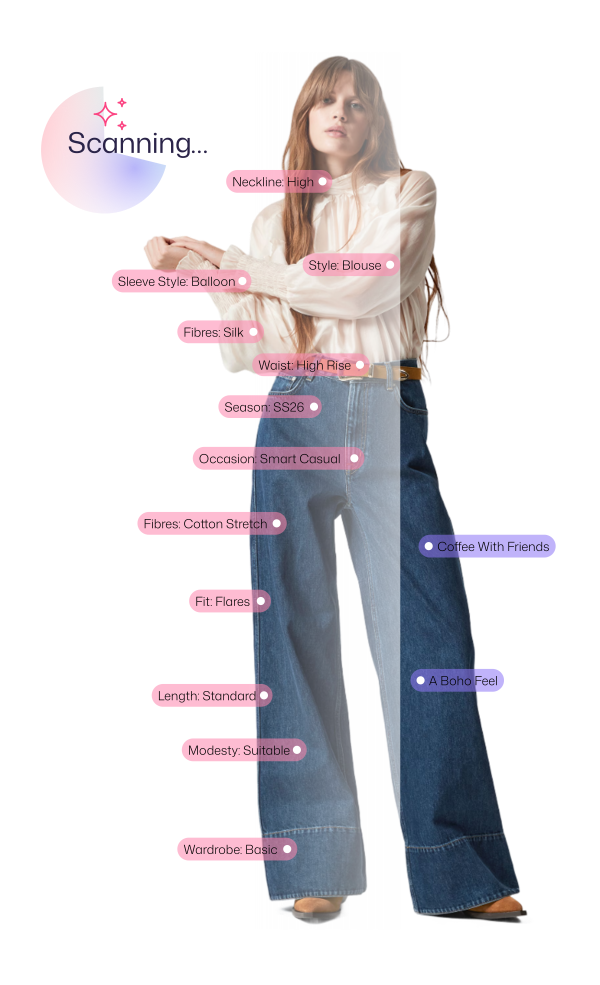
Brands with citations share a common foundation: deep, structured product intelligence. Not generic metadata, but domain-specific understanding of how a product functions within an outfit, which customer it suits and what occasion or mission it serves. This is the language shoppers and AI systems can act on.
Discoverability cannot be bought at the top of the funnel, but built into how products are described from the start. Retailers with that foundation are seeing 4% to 7% revenue uplifts, significant reductions in return rates and genuine visibility in an AI-driven discovery layer that most competitors have yet to reach.
[1] Mapp & SEMrush. (2026) Mapp Fashion Digital Intelligence Report 2026.
