

Rob Donovan
Project Director, Cadent
The HyNet Hydrogen Network project has been designed to connect the North West’s key industry with low-carbon hydrogen. It’s also an opportunity to future-proof the region’s growth and industrial workforce.
Industrial decarbonisation isn’t just a ‘nice to have’ for the UK’s gas sector. It’s a central feature of the country’s net zero timetable and will future proof critical UK industry for generations to come.
Low-carbon hydrogen distribution
Cadent, the nation’s largest gas distribution network, is involved in two flagship projects designed to connect low-carbon hydrogen production and storage with key regional industrial users. The first is H2 East, a pipeline running from the Humber down to Newark in Nottinghamshire. The second scheme — and the most mature — is HyNet, a 100km low-carbon hydrogen distribution network running across the North West.
“The benefit of low-carbon hydrogen is that it can be used across a wide range of applications,” explains Rob Donovan, Project Director. “It gives high heat and flames which industrial processes need. It provides high heat and flames which industrial processes need to deliver their critical process. Having low-carbon hydrogen infrastructure in the North West will support industrial off-takers now and in the future — and importantly, will attract new industry, too.”
HyNet could also be a once-in-a-generation opportunity to protect businesses
and future-proof the region’s industrial workforce
Cutting carbon emissions and future-proofing industry
HyNet would help the region’s hard-to-abate such as glass and chemical manufacturing industries drastically cut their carbon emissions and support the Government’s Clean Power 2030 Action Plan. Over time, the hope is that different regional hydrogen networks will join up to create a wider supply. However, speed is of the essence. Rob Donovan notes that hydrogen project adoption has been delayed in recent years due to different political changes and policy decision updates.
Currently, Cadent is waiting for the government to announce a competitive process to select the UK’s first regional hydrogen network and hopes that, ultimately, HyNet will be successful. If it is, Cadent would expect to have the network operational by 2033.
“It’s a project that we have been developing for five years,” he says. “We believe it’s ideally positioned to deliver at pace and kickstart the hydrogen economy in the North West — a location that has always innovated and supported industry.” Another advantage is its geographical proximity to blue hydrogen production projects, plus the underground geological strata in the region which can be utilised for large-scale energy storage.
Protecting businesses and industrial plants
Apart from aiding the energy transition, Rob Donovan says that HyNet could also be a once-in-a-generation opportunity to protect businesses and future-proof the region’s industrial workforce. “The industrial plants in the North West have such important heritage,” he notes. “They are integral to local communities, jobs and skills. We should be proud of them and want to keep them competitive — and keep them here in the UK, doing what they do best. HyNet is a way to support that.”
Pilkington UK HyNet case study
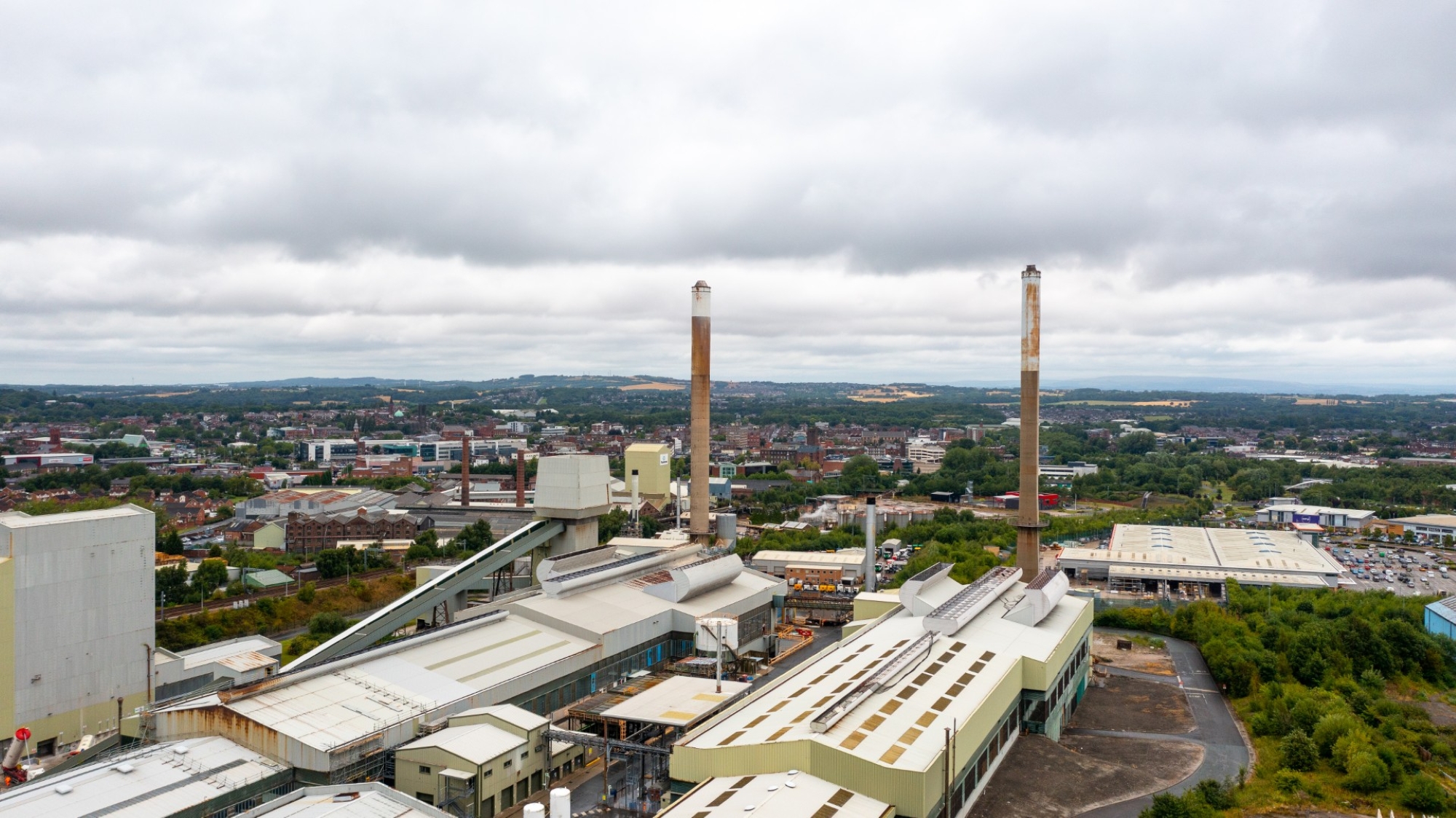
Pilkington UK is a glass manufacturer based in the UK, with its glass being used in some of the world’s best-known buildings, from the Empire State Building to The Shard.
It is exploring how it can enable the supply of low-carbon hydrogen to its Greengate Works site in St Helens, which is one of the last primary float glass manufacturing sites in the UK. Flat glass production is inherently energy intensive, requiring continuous high-temperature heat in excess of 1,500°C that’s delivered reliably over furnace campaigns lasting more than a decade.
Hydrogen as a scalable solution to decarbonisation
Decarbonisation represents one of the major challenges facing the sector, but hydrogen provides a viable and scalable solution, with Pilkington UK the first architectural glass manufacturer in the world to trial the firing of hydrogen in a glass furnace back in 2021.
It can act as an alternative to the natural gas that powers Pilkington UK’s furnaces and is compatible with the site’s processes, allowing it to maintain product quality and ensure the stability of its operations while reducing its carbon footprint.
Protecting UK manufacturing capability
Hydrogen can also be blended with natural gas in the short-term, providing a flexible transition pathway that will allow the business to make immediate progress on its efforts to reduce emissions by 30% by 2030, and achieve carbon neutrality by 2050. Introducing a hydrogen infrastructure at Greengate Works will help to safeguard a critical UK manufacturing capability while ensuring the industry plays its part in the country’s wider transition to net zero.
