


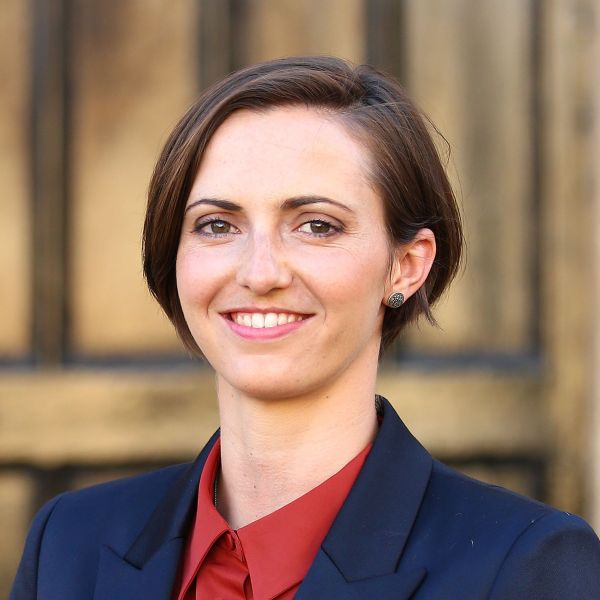
Dr Heloïse Greeff
Pro Investor, eToro
Dr Heloïse Greeff is a pro investor whose multi-strategy portfolio is copied by thousands. She shares some advice and tips for anyone who is new to the world of investing.
Being a pro investor was never part of Heloïse Greeff’s career game plan. Growing up in South Africa, she was drawn to maths and science at school (“I wanted to build things and solve problems!”), which led her to a Mechatronics Engineering degree at the University of Cape Town. Later, she won a place as a Rhodes Scholar at Oxford University, where she completed a Master’s in Biomedical Engineering, an MBA and a doctorate.
Now, however, Dr Greeff is one of the most popular pro-investors on social multi-asset investment platform eToro, with more than 250,000 followers and more than 6,000 ‘copiers’ (i.e. investors who mirror her multi-strategy portfolio).
Ten years ago, though, investing was completely new territory to her. “As a child, I had no exposure to the stock market,” she says. “And none of my family members were in finance. I guess I came to it through the side door when the boys in my MBA class were at least claiming to be investing on their phones under their desks.” She finally took the plunge in 2016 when, starting with $300, she began investing in fractional shares to grow a diversified portfolio.
investing rewards patience and punishes over-confidence
Busting some common myths and misconceptions
Dr Greeff notes there are various misconceptions about investing in the stock market. “The first is that you need to be wealthy to start,” she says. “That’s not true. You can buy pretty expensive stock now for as little as one pound. Secondly, there’s the thinking that ‘investing’ equals ‘gambling’. Unfortunately, everybody knows somebody — who knows somebody — who has not made a good investment for multiple reasons, not always related to the investment itself. Fear-mongering around investing is still very prevalent. The third one is ‘activity equals skill’ — the more you do, the better you are. Actually, the inverse is true. The less activity you have in long-term investing, the more thought you will have put into it.”
The fact is, investing rewards patience and punishes over-confidence, notes Dr Greeff. “Charlie Munger (the late American businessman and investor) said the four cardinal virtues of investing are preparation, patience, discipline and objectivity. One thing I’ve learned over a decade of publicly investing on the stock market is that humbleness, curiosity, always learning and never taking anything for granted is incredibly important for new and experienced investors. So, caution should always be a part of your decision-making. Unfortunately, for many people — including myself — it can be a barrier to taking that first step.”
Building a diverse portfolio to spread investment risk
For those who have never invested and don’t know where to begin, her advice is: start small. “Invest with an amount that wouldn’t be life-changing or life-altering but helps get you over the barrier of starting immediately,” she says. “Open an ISA on a regulated platform. And then the easiest thing is to set up a monthly direct debit. It takes away the emotional turmoil of having to make that decision because everything is automated.”
Dr Greeff also recommends building a diverse portfolio to spread the risk. Plus, don’t expect instant gratification: prepare for an investment time horizon of 5 to 10 years — and think about following or copying a pro investor because it’s a good way to learn more about the market. Also, expect to make mistakes. She did at the start of her investing career, she admits.
Finally, get comfortable with the idea that there is no ‘right moment’ to invest. “But if you go in with a little bit of information — which is now freely and excessively available — there is no reason why you shouldn’t be investing,” says Dr Greeff. “The barrier is lower than ever before.”
Your capital is at risk.
