
The chemical and refining sector faces a twofold challenge: it has to become more competitive and also more sustainable. Leuven-based scale-up Zeopore Technologies is responding to this need with an innovative catalyst technology that optimises existing processes without the need for major modifications. CEO Kurt Du Mong and investor Wouter Van de Putte (Capricorn) explain how this approach offers both economic and environmental benefits.
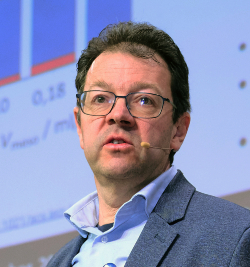
Kurt Du Mong
CEO
Zeopore Technologies
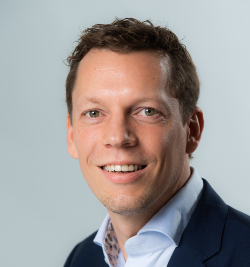
Wouter Van de Putte
investor
A small change with a big impact
‘With Zeopore, we are developing a patented, scalable catalyst technology that makes refining and chemical processes more efficient, more sustainable and more economically viable’, says Kurt Du Mong. The technology focuses on zeolites, crystalline materials that have been used as the active component in industrial catalysts for decades. Although zeolites are highly efficient, they have one limitation: their pores are often too small, making it difficult for molecules to move through them or even trapping them.
Du Mong: ‘We enlarge those pores in a controlled way, allowing us to improve the flow of molecules. The result: A 2 to 4% increase in efficiency, reduced waste streams, lower energy consumption and a reduction in CO₂ emissions. Across the huge volumes in this sector, that makes a very big difference. In a single refinery this can yield annual savings of up to 15 million dollars, as well as a major reduction in their emissions of about 1,000 kt of CO2’, says Du Mong.
Attractive to the industry and also to investors
According to Wouter Van de Putte, this is precisely its strength. ‘Zeopore has developed a smart and accessible solution for a sector under considerable pressure.’ It has to work more efficiently, in a way that is closer to more sustainable raw materials, within capital-intensive infrastructure that cannot simply be replaced. Zeopore creates value within that context, without the need for major investment or significant changes. Only the active ingredient has changed.’ He sees that ease of implementation as crucial. ‘Processes are already becoming more sustainable and competitive, as well as better prepared for the full transition to sustainable raw materials.’
Capricorn deliberately invests in companies that operate within the existing industrial landscape. ‘We focus on scalable innovations that reduce energy and raw material consumption while creating economic value.’ ‘Zeopore fits perfectly within that strategy,’ says Van de Putte.
Accelerator for sustainable innovations
As well as optimising existing processes, Zeopore also sees opportunities in new applications. ‘Our technology plays a key role in driving sustainable innovations,’ says Du Mong. One example is Sustainable Aviation Fuel (SAF), a fossil-free alternative to kerosene made from renewable raw materials. ‘The production of SAF is currently still more expensive than fossil fuels. We can make that process up to ten per cent more cost-effective and thus more suitable for industrial use’, says Du Mong.
Zeopore also makes recycling of plastics more efficient. ‘Mechanical recycling results in a loss of quality, but through optimised chemical processes we can restore materials to their original state again and again.’ Zeopore is making breakthroughs in the field of CO₂ utilisation too. ‘We have recently shown that our technology can significantly improve the conversion of CO₂ into sustainable fuels’, he adds.
From credibility to scale
As a new entrant in a market dominated by multinationals, building credibility is essential. ‘Our previous small-scale trials with customers were very successful, but we want to demonstrate that it works on an industrial scale too’, says Du Mong. That is why Zeopore invested in a small production facility in Leuven that is capable of handling industrial-scale volumes. This makes it possible to supply customers with the first commercial volumes for final validation.
Zeopore has been supplying these larger volumes to multinationals since 2025, and they are continuing to demonstrate their significant added value. This is why Zeopore is currently in talks with these major chemical corporations to launch its products worldwide. One recent example is the announcement by Evonik, a German high-tech catalyst manufacturer, that it will offer Zeopore’s technology through its global sales networks.
At the same time the company is also receiving support from various organisations. ‘We have been recognised and supported by VLAIO for eight years now and were recently named winners of the Essenscia Innovation Award’, says Du Mong. ‘It confirms that we are an important link in the transition to a sustainable and future-proof chemical industry.’
