

Jocelyn Paulley
Partner, Gowling WLG

Tom Baines
Partner, Gowling WLG
As data centre demand rises exponentially, stakeholders need to navigate strategic and legal challenges in a complex and changing landscape.
“There’s a growing acceptance that AI is going to materially change the way we live and work,” says Tom Baines, Partner at international law firm Gowling WLG. “So, the question is: How much new infrastructure will be needed to support it?”
If the estimates are right, the answer is: an immense amount. It’s this expectation currently driving the rapid growth of data centres across the world. While the US remains the biggest data centre player globally, Europe and the UK are seeing significant growth — and demand is rising.
This rise in demand is changing the data centre delivery landscape. For instance, London has long been the major data centre hub in Europe, but a shortage of power and land is pushing projects into the regions.
Evolving nature of data centres
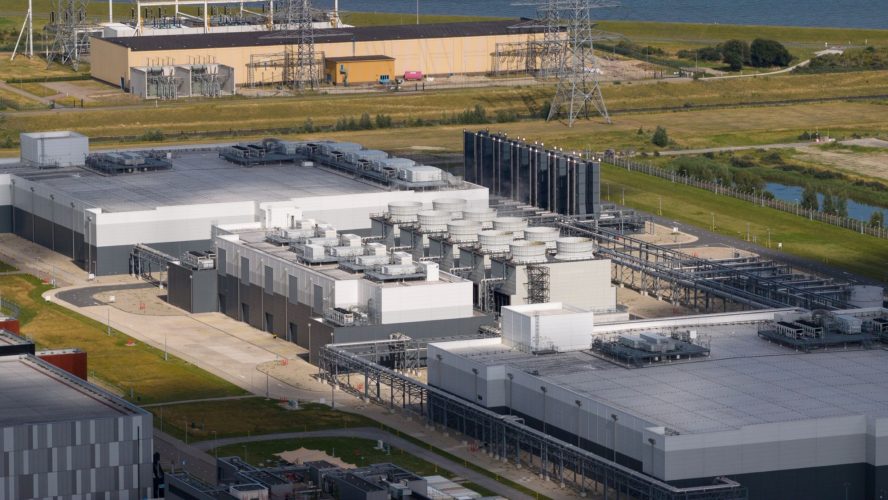
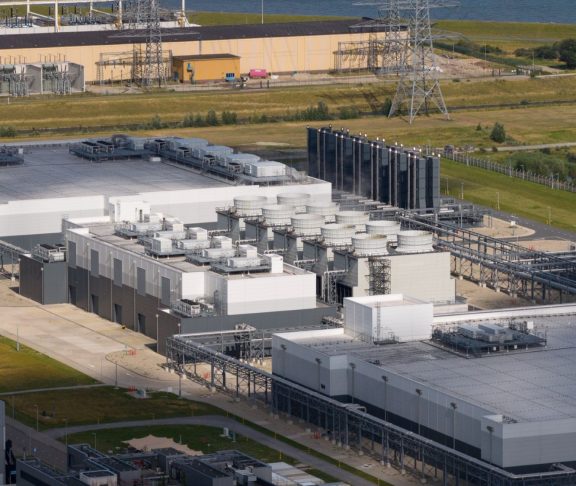
Data centres have been around for longer than many realise. But the meteoric rise in data creation, and processing demands of AI language learning models, are driving the need for bigger facilities. “At one end of the spectrum, there are ‘edge’ data centres, typically small and located close to urban conurbations to support systems that need real-time responses,” explains Jocelyn Paulley, Partner, Gowling WLG. “At the other end, there are ‘hyperscale’ data centres, which are huge and high-spec.”
The technology underpinning data centres is also rapidly evolving. The pool of people who know how to build, develop and operate these facilities is small, so competition for their skills is fierce. The past year has seen high profile collaborations between data centre operators and property companies, marrying expertise with land banks and development pipeline.
Challenges of data centre development
Although data centres serve many different purposes, they all share the potential to create legal and strategic challenges for operators, developers and investors.
“Firstly, finding the right location for a data centre is key,” says Baines. “Edge data centres need to be close to end users for latency, while those designed for AI machine learning can be further away.” Crucially, though, whatever type of facility is mooted, it will need proximity to power. This can often be the most significant obstacle; getting projects connected to the grid can take as long as a decade, with little comfort offered around timescales.
This lack of certainty can make projects difficult to get off the ground. The planning process — another pain point for developers and investors — can also be frustratingly slow.
“It’s why operators and developers are looking at former industrial sites with established power connections,” says Baines. “These sites are ‘oven-ready,’ they can reduce uncertainty and significantly de-risk a project.”
Occupier risk
Securing an end-user is often crucial to make a project financially viable.
“A further issue is that data centre owners will need to find a main occupier in order to secure funding needed for development,” notes Paulley. “Many will prefer a hyperscaler because these are big businesses that offer the guarantee of strong financial covenants. However, hyperscaler customers impose strict contractual requirements on operators for service levels and ensuring the developments go live on time, with credits and payments due if those measures are not met.”
Any delays could result in substantial penalty payments for developers, and missing service levels will result in potentially hefty credits, further increasing their risk profile.
The past year has seen high profile collaborations between data centre operators and property companies, marrying expertise with land banks and development pipeline.
Seeking crucial advice from experts in a high-stakes sector
For these and many other reasons, stakeholders will require end-to-end support from legal professionals who know the data centre delivery environment well and have expertise in issues such as real estate development, energy, planning, funding, compliance, commercial contract law and leasing.
“This is a fast-moving, high-stakes sector,” says Baines. “Those operating in it need advice from an interdisciplinary team of specialists who have an ingrained understanding of the challenges of data centre delivery, how these projects differ from other developments and what it takes to make them successful.”
