

Jason Longhurst
UK Head of Sustainable Investment & Partnerships
The UK’s economic performance rests on the strength of its supply chains. From advanced manufacturing and life sciences to retail and construction, every sector depends on resilient, well-located logistics facilities.
Logistics is no longer simply about distribution. It underpins growth, supports the energy transition and shapes regional competitiveness.
As consumer demand evolves and operations become more technology-driven, the customer requirements we see in the market are rapidly changing. Electrification, automation and digitisation are increasing power demand, while many businesses face mounting pressure to decarbonise.
A challenge, but also an opportunity
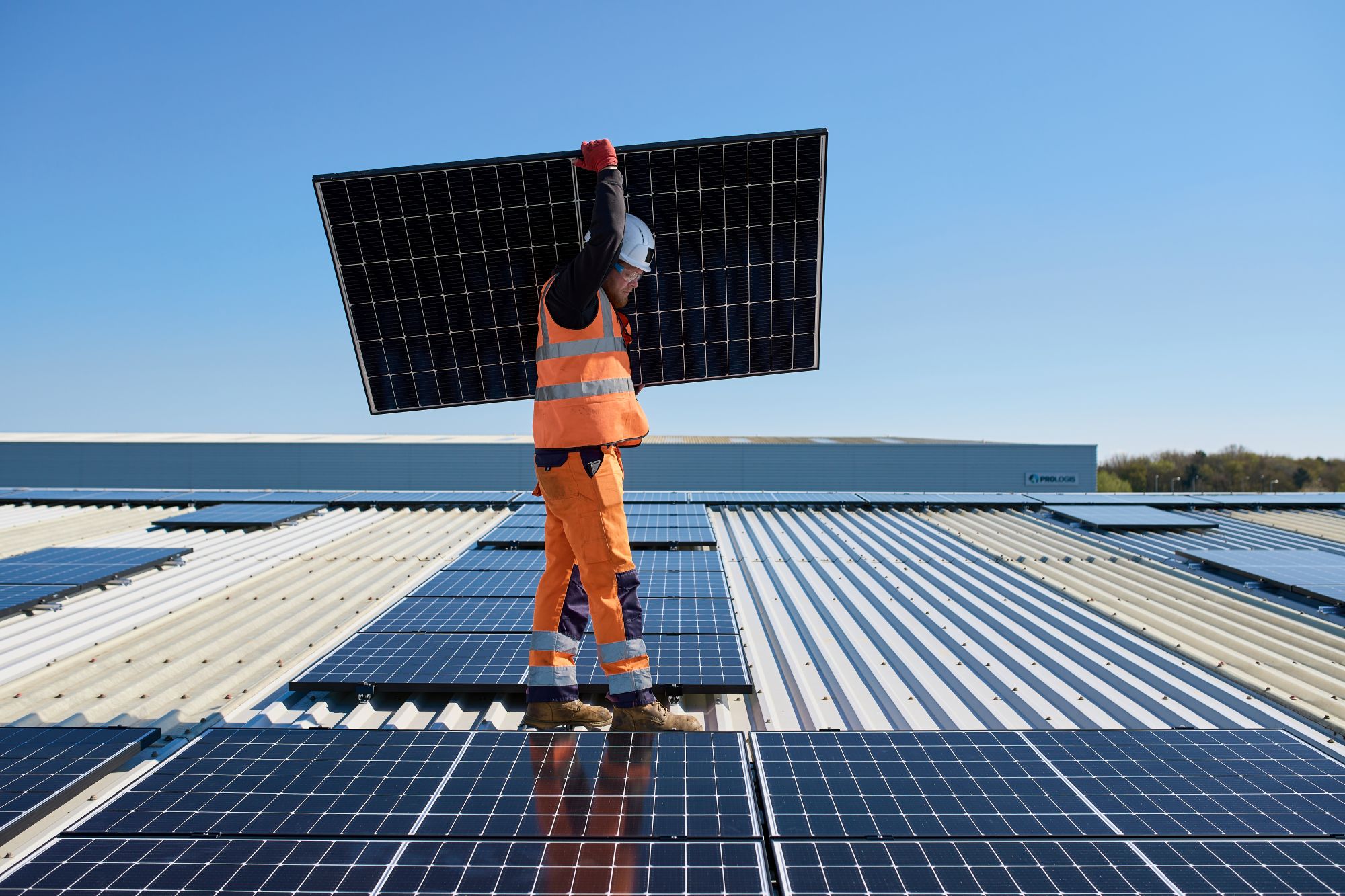
Well-planned logistics parks can provide the physical and energy platform that the modern economy needs. Large-scale rooftop solar, battery storage, EV charging and grid capacity can be designed in from the outset, rather than retrofitted later.
In doing so, logistics real estate becomes part of net zero delivery. It enables customers to electrify their fleets, operate more efficiently and cut emissions, while strengthening domestic supply chains and attracting long-term investment.
At Prologis, we take a long-term view. Properly planned and properly powered, logistics real estate is fundamental to the UK’s economic future.
Policy must keep pace
Planning reform, grid investment and energy strategy need to reflect the realities of modern supply chains and rising power demand. Development at scale requires a system that is clear, consistent and focused on delivery.
The proposed reforms to the National Planning Policy Framework are therefore significant. Greater certainty would give investors like Prologis the confidence to commit capital — unlocking jobs, growth and the infrastructure the UK needs.
Spatial Development Strategies also offer promise. By aligning housing, employment land and transport across functional economic areas and grounding decisions in labour markets and supply chains, they can provide a more coherent framework for growth.
For too long, logistics has been an afterthought in strategic planning. Yet it supports almost every part of the economy. Recognising its role in national prosperity and the energy transition is essential if the UK is to compete effectively.
At UKREiiF, conversations will centre on unlocking development and attracting investment. With planning reform and energy policy moving in step, there is a real opportunity to deliver energy-ready logistics at the scale the economy demands.
At Prologis, we take a long-term view. Properly planned and properly powered, logistics real estate is fundamental to the UK’s economic future.
