

Dr. Dennis Göge
Chief Executive and Vice President, Europe, Lockheed Martin
Advanced technology is central to defence innovation. But success also requires aligned funding, agile procurement and industrial capacity in order to scale solutions rapidly.
“Innovation at speed” is now a phrase that appears in almost every defence strategy document across NATO. From an industry perspective, this isn’t simply about moving faster through existing processes, however. It requires building the conditions that allow for rapid adaptation before a formal requirement is issued.
One way that Lockheed Martin ensures that its high-in-demand capabilities can be manufactured faster and in more quantity is through innovative co-production agreements with its industrial partners. For instance, it has a MOU (Memorandum of Understanding) with integrated technology group Rheinmetall to establish a Centre of Excellence for European Security in Germany for the manufacture of missiles.
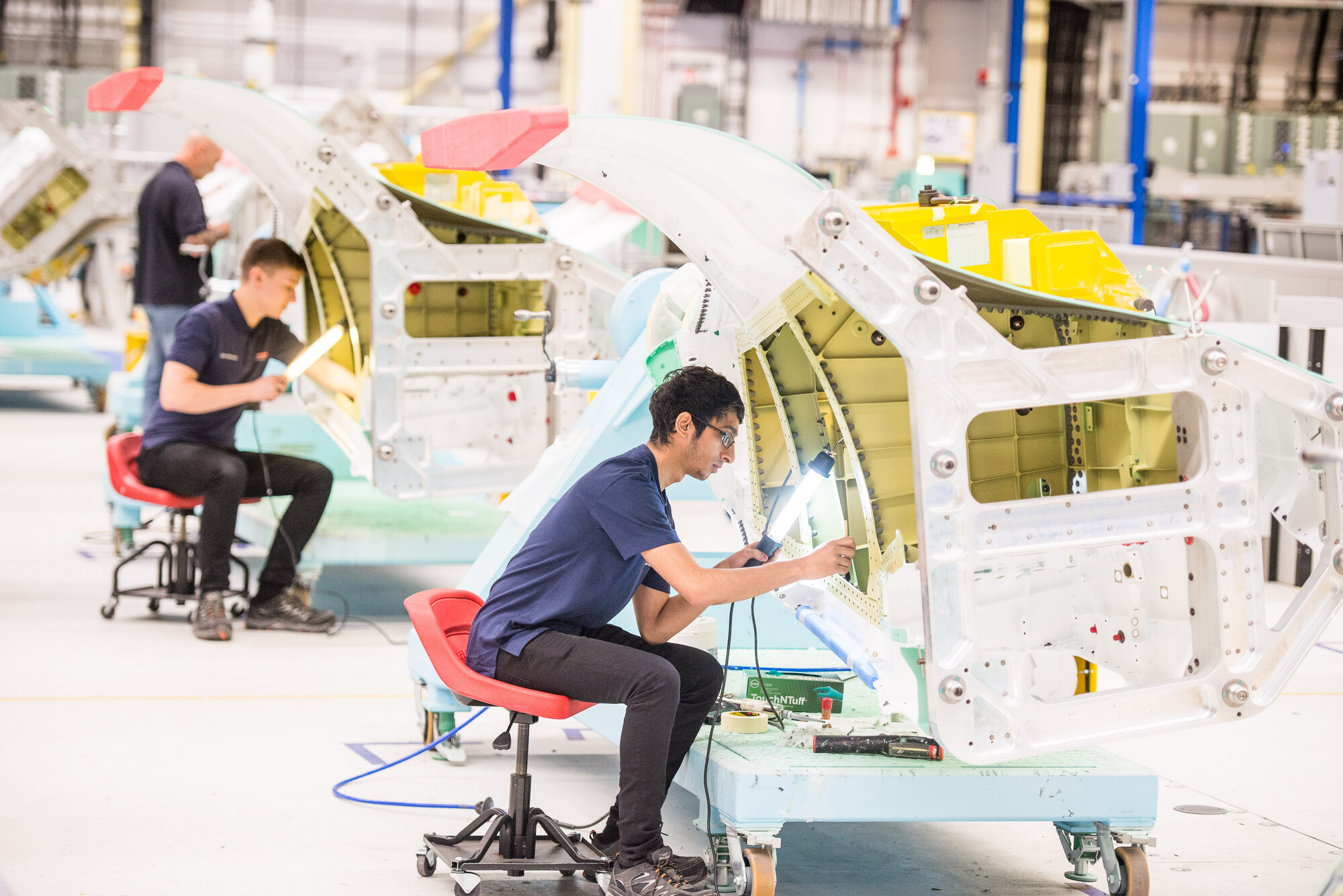
“Cooperations will be key to increasing the pace of manufacture to ensure strong inventories and security of supply across Europe,” explains Dr. Dennis Göge, chief executive and vice president, Europe, Lockheed Martin. “A great example is the F-35 aircraft. Twenty-five per cent by value of every F-35 built is produced in Europe. Among others, we are partnering with Rheinmetall in Germany, Patria in Finland and BAE Systems in the UK to produce major aspects of every F-35 sold around the world, and with Leonardo we are operating a F-35 final assembly and checkout facility (FACO) in Cameri, Italy.”
Ultimately, innovation at speed is less about accelerating individual programmes
and more about creating a defence ecosystem that can continuously evolve
Shortening the path from concept to deployment
Digital engineering is another key element of rapid adaptation. Indeed, the company has consistently demonstrated that digital engineering enables design, manufacturing and sustainment teams to work from a common data environment, reducing rework, accelerating testing and shortening the path from concept to deployment. Its strategic investment arm, Lockheed Martin Ventures, has partnered with more than 120 companies globally to develop emerging technologies that will shape the next generation of defence and aerospace capabilities.
To ensure commercially derived capabilities can be rapidly inserted into defence programmes, the company is also leading in the development and adoption of cloud computing, 5G, autonomy, data analytics — and AI. In fact, the company has been working with AI for decades to ensure its systems are smarter, more secure and more interconnected.
“Ultimately, innovation at speed is less about accelerating individual programmes and more about creating a defence ecosystem that can continuously evolve,” says Dr. Göge. “The organisations that succeed will be those that invest early, experiment continuously and arrive at the customer’s problem with solutions already in development rather than waiting for a requirement document to appear.”
