King Lee
Head of Policy and Industry Engagement, World Nuclear Assocation
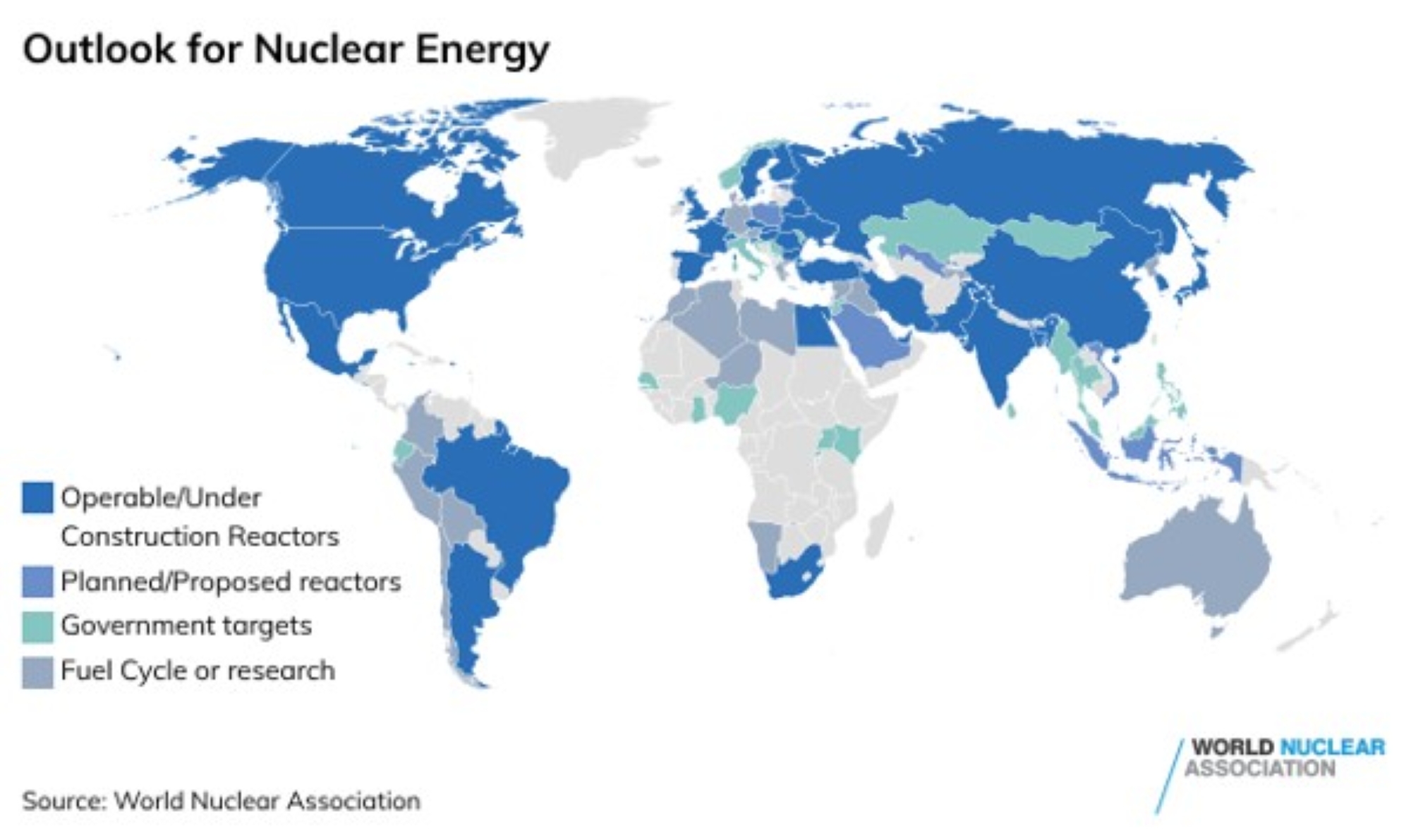
Nuclear energy is attracting renewed interest as governments look for reliable low-carbon power to meet growing electricity demand and address energy security concerns.
Thirty-nine countries, including the UK, have endorsed a declaration to triple global nuclear capacity. This commitment is supported by stated national nuclear targets which could lead to the global nuclear capacity of 1,457 GWe by 2050. The scale of this Government ambition raises a practical question: how can countries turn policy ambition into deliverable programmes of new nuclear construction and reap the reward of long-term jobs and economic benefits?
Nuclear energy at scale
Expanding nuclear capacity will require more than favourable targets. It will require strategic development across the global nuclear value chain: policymakers working with project developers for long-term market frameworks, a predictable and streamlined regulatory environment, investment in key industrial supply chains and investments to build the skilled workforce that will be required. The scale and pace of global nuclear development will depend on the nuclear sector’s ability to move from individual projects to sustained programmes of new nuclear construction. All of this requires collaboration.
will bring together local developers and the global nuclear industry
to share nuclear power programme development ideas and opportunities
Nuclear energy development projects
A number of Southeast Asian countries are moving forward with nuclear energy project development, with many governments exploring nuclear as part of their future clean energy mix. World Nuclear Association is co-organising the World Nuclear Supply Chain Conference 2026 in Manila, Philippines, to provide the forum for the collaboration that will be essential to growth.
This conference will bring together local developers and the global nuclear industry to share nuclear power programme development ideas and opportunities and to facilitate new business relationships and partnerships. The agenda reflects a practical need: a Business-to-Government (B2G) and Business-to-Business (B2B) networking programme that connects suppliers, developers and investors with government representatives and agencies driving national nuclear strategies across ASEAN and beyond.
The success of nuclear build programmes in a number of countries provides key learnings. The next phase of nuclear growth will be defined by how effectively policymakers and industry work together to deliver nuclear programmes across regions to provide clean energy and economic development.
