 Business & Industry
Future of EdTech Q3 2023
-

How digital literacy can help us navigate AI and our online behaviours
Digital literacy can be defined as ‘the skills and knowledge required to be an effective, safe and discerning user of a range of computing systems.’ According to the National Centre for Computing Education’s (NCCE) ‘Digital Literacy Within the Computing Curriculum’ 2021, there are five key areas that need developing to help prepare for life in...
-

How to make blended learning effective and inclusive
Blended learning is the merging of in-person, classroom education and remote, digital tools. Adopted correctly, blended learning can encourage inclusivity and benefit students and educators alike. The integration of technology into education, commonly known as edtech, has evolved rapidly in recent years, culminating in the rise of blended learning — a transformative approach that combines...
-

s Sponsored
From answers to questions: education’s big shift
With knowledge and quality answers just clicks away, especially with advances in artificial intelligence (AI), education is transitioning from the era of answers to the era of questions. In an age where AI swiftly provides answers, the value of asking the right questions is emerging as a key skill for teachers and students. Drive towards...
-

s Sponsored
Modern learning: how to use digital solutions to enable inclusive education
Traditional classrooms are embracing technology, and an innovative suite of interactive displays, laptops and cloud-based systems are being seamlessly woven into the fabric of modern learning environments. Amidst an ever-changing educational landscape, ASUS Education stands at the forefront of a profound paradigm shift with digital solutions shaped to enhance modern learning. Modern learning trends One...
-

AI learning: the benefits students and teachers need to know about
By leveraging AI technologies, students and teachers can benefit from enhanced personalised learning experiences, improved administrative tasks and access to a wealth of educational resources. The integration of artificial intelligence (AI) in education has the potential to revolutionise the way students learn and practitioners teach in primary and secondary education. Tailored learning benefits with AI...
-

s Sponsored
How tech can improve data-driven decision-making and insights with baseline assessments
Technology can shape the development of adaptive baseline assessments to improve student engagement and accessibility. As Cambridge Centre for Evaluation and Monitoring (CEM) turns 40, we look back on the technologies that shaped baseline assessments and what the future holds. What can we learn from 40 years of assessments? The shift from paper-based tests to...
-

Overcome the edtech challenge: how to find the right products and support
Finding the right edtech products for your school can be difficult. Who do you turn to for advice? Who can you trust to guide you? How can you see beyond the hype to find the edtech that will make a difference in your school? The LendED platform is a free-to-use online portal produced by the...
-

Supporting visible and invisible needs with technology for SEND learners
When thinking about educational technology (edtech) to support our special education needs or disability (SEND) learners, we need to think about everything that might sit below the surface. One of our most famous exports in Belfast is the Titanic. If we think about that notorious iceberg, we know that only 10% was visible above the...
-
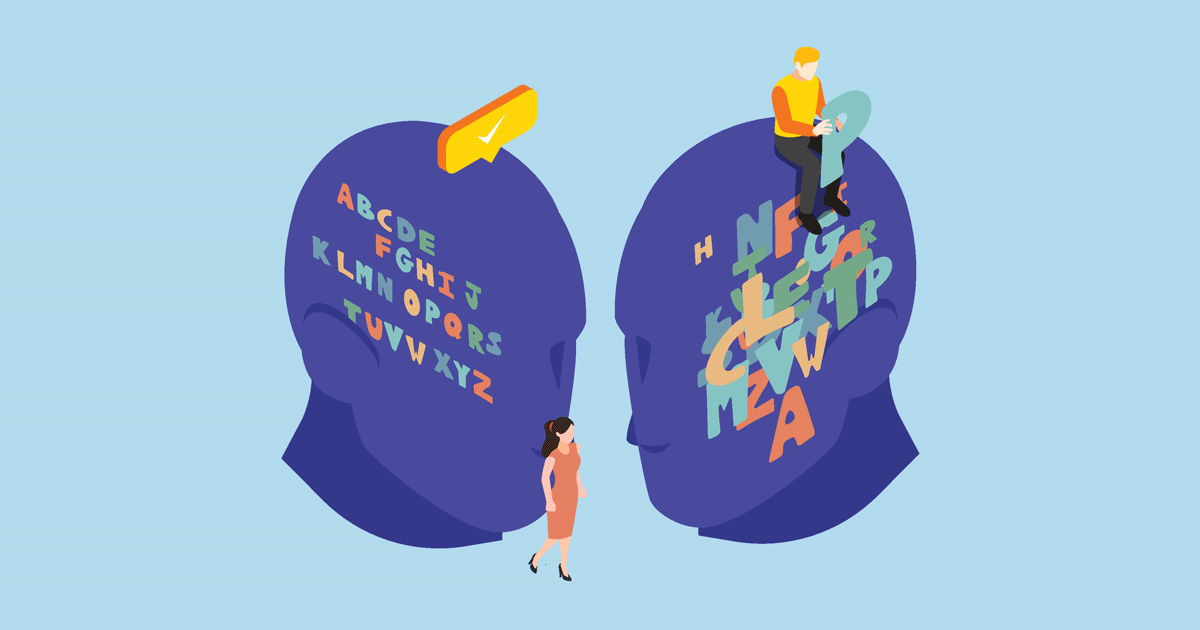
Don’t let words hold students back: using edtech for dyslexia support
Approximately 10% of the population has dyslexia. That could mean up to three students in every class. Although, we know that these numbers are likely much higher — now, edtech can support students with dyslexia. When I take my glasses off, I find it hard to read; and I’d really struggle to drive a...