Business & Industry


Dominican Curran
Head of Communications, Real Estate: UK
Nick McKeogh
Chief Executive, NLA
Joe Manning
Managing Director of Invest Manchester
Juian Best
Executive Property Manager, The Howard de Walden Estate
From infrastructure and investment to planning, technology and placemaking, the decisions made today will shape how the UK’s towns and cities evolve over the decades ahead. We bring together voices from across the built environment and regional economy to explore what needs to change — and how long-term thinking, collaboration and innovation can help create places that are resilient, investable and fit for the future.
Q: When we talk about ‘building a better future,’ what does the UK most need to get right over the next 10–30 years?
Dominic Curran: We need to get the basics right. Our grid cannot support the new development for which there is planning permission, let alone the amount that we actually need. We need to boost our water resilience – more reservoirs and investment to protect us from more floods and droughts. We need to futureproof our built environment for the more extreme heat. We need investment to reduce energy demand but also ensure homes and workplaces can be cooled in a sustainable way when needed – the challenges are immense.
Julian Best: Across London, we should continue to adopt long-term commitments and continuity to encourage investors, development and new businesses to join and thrive in the area. The key ingredients for a bright future for London are already there: fantastic educational opportunities, innovation and research. But the city does still need to invest a lot in digital technology, and we need to ensure our offering is fit for purpose and resilient for the future.
Q: What makes a place genuinely investable today, and what needs to change to make more UK towns and cities competitive for long-term capital?
Julian Best: Concentration and geography really matter. If you look at that corridor between King’s Cross and Paddington, you won’t find another cluster of education, innovation and land ownership anywhere else that’s able to put itself on the international stage like that. The thing that could be improved is the joined-up collaboration.
Joe Manning: Truly investable places offer more than individual development opportunities. International investors are not simply choosing a site; they are choosing an ecosystem in which they can recruit, innovate and grow.
The Government’s commitment to “devolution, not delegation” is particularly timely and would give mayors and local authorities greater control over housing, transport, energy, innovation and skills. The aim is the joined-up approach the industry has been asking for. It only works if the built environment is treated as an economic lever.
Q: If you could change one thing tomorrow that would materially improve the UK’s ability to build the future we need, what would it be?
Dominic Curran: There isn’t one really big thing that will be a silver bullet – the viability crisis has been caused by lots of smaller things being layered on top of each other, so only fixing one of those will have a limited impact. If it had to be just one thing, the answer, paradoxically and counter-intuitively, might be: stop the Government from doing anything that affects the industry for a decade. Stability has its merits too.
Joe Manning: I would give city regions greater freedom to turn investment interest into delivery. Local leaders understand their assets, opportunities and barriers, and Greater Manchester’s journey has shown that places can move faster when the foundations of growth are aligned behind a common vision. With the right powers and long term funding certainty, city regions can unlock sites, accelerate decisions and give international businesses greater confidence to invest in the UK.
RE:UK
When we talk about “building a better future”, what does the UK most need to get right over the next 10–30 years?
We need to get the basics right. Our grid cannot support the new development for which there is planning permission, let alone the amount that we actually need. We need to boost our water resilience – more reservoirs and investment to protect us from more floods and droughts. And we need to futureproof our built environment for the more extreme heat. Investment to reduce energy demand but also ensure homes and workplaces can be cooled in a sustainable way when needed – the challenges are immense.
We know there is demand for homes, infrastructure, commercial space and investment — so what is currently preventing us from delivering at the scale and pace required?
Political and regulatory consistency. Sudden changes in the rule sor those in charge of them unsettles investors, and in a world where capital is global we have to be seen as a safe destination for investment. We also need governance structures that operate at the right level – we are seeing this increasingly with devolved mayoralties and combined authorities – more moves in this direction are welcome.
Material, labour and finance costs have doubled in a decade, while sale prices have not. At the same time,
further regulation has been heaped on the sector. While individually well-intentioned and defensible, the cumulative impact of these regulations and costs has been to take the profit out of building.
The pot isn’t infinite and builders are businesses – take away their profit, and they simply won’t build.
Is the biggest barrier capital, planning, viability, infrastructure or the ability to coordinate public and private stakeholders?
All of the above but at the moment viability is what is stopping development. Material, labour and finance costs have doubled in a decade, while sale prices have not. At the same time, further regulation has bene heaped on the sector. While individually well-intentioned and defensible, the cumulative impact of these regulations and costs has been to take the profit out of building. The pot isn’t infinite and builders are businesses – take away their profit and they simply won’t build.
Final question: If you could change one thing tomorrow that would materially improve the UK’s ability to build the future we need, what would it be?
This is a hard question because there isn’t one really big thing that will be a silver bullet – the viability crisis has been caused by lots of smaller things being layered on top of each other, so only fixing one of those will have a limited impact. If it had to be just one thing, the answer, paradoxically and counter-intuitively, might be: stop the Government from doing anything that affects the industry for a decade. Stability has its merits too.
HdWE:
When we talk about “building a better future”, what does the UK most need to get right over the next 10–30 years?
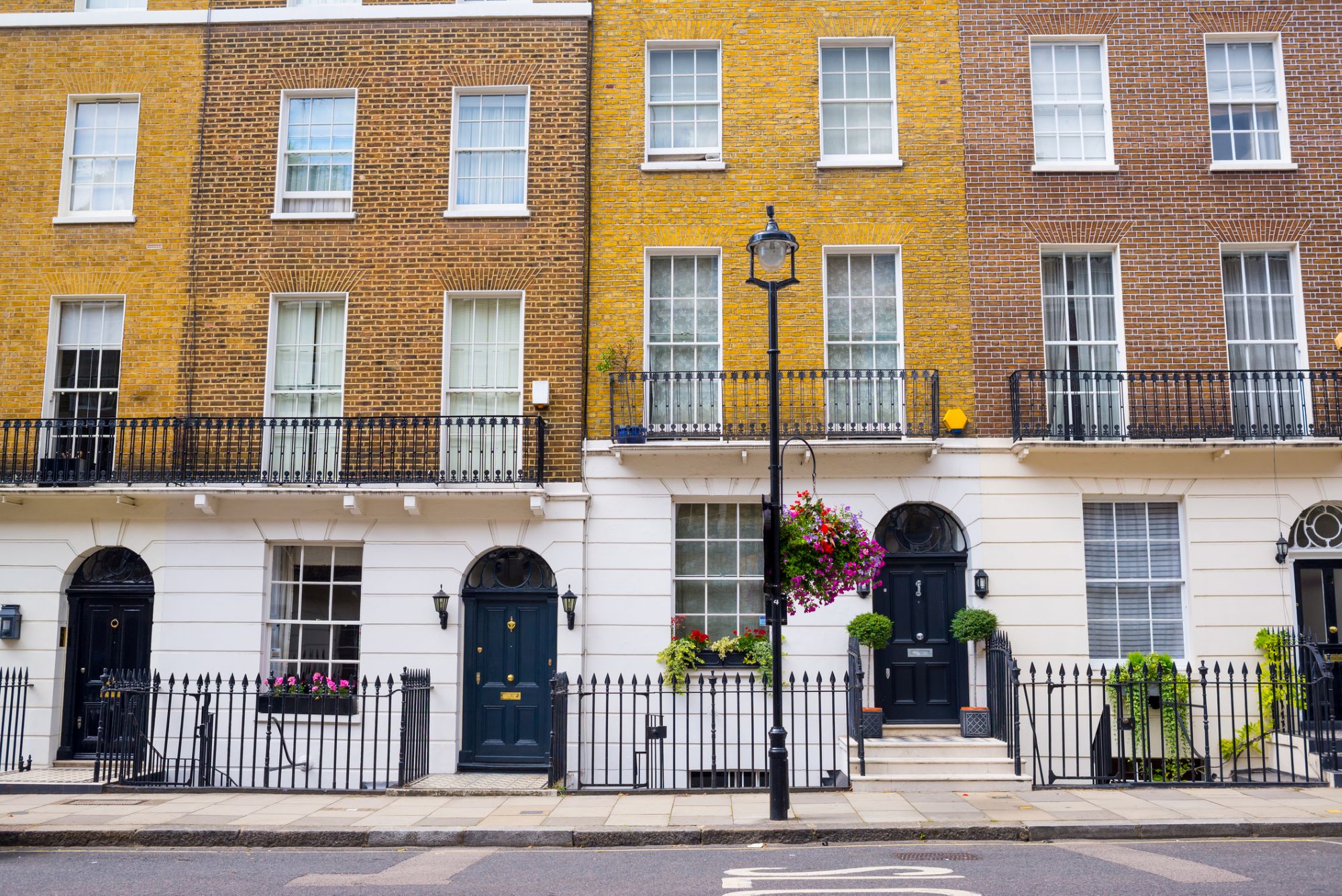
London – and Marylebone – is a great place already, but we can’t be complacent in our approaches. Across London, we should continue to adopt long term commitments and continuity to encourage investors, development, and new businesses to join and thrive in the area.
One clear, recent example I’ve pointed to a couple of times is the Elizabeth Line. We wouldn’t have that if it wasn’t for long term decisions and commitment from developers, local and central government – that line was born out of decisions made more than 30 years ago, and it’s changed commuting and residing patterns and brought hundreds of thousands of people closer to being able to commute into central London for work.
The key ingredients for a bright future for London are already there: fantastic educational opportunities, innovation, and research. But the city does still need to invest a lot in digital technology, and we need to ensure our offering is fit for purpose and resilient for the future. If we don’t do that, London will suffer, because it won’t be able to sustain development and encourage new entrants and new investment coming in. That’s something we’re really focused on at the moment at Howard de Walden, particularly with our investment into innovation and healthtech in Harley Street Health District as well as future-proofing the estate, which is especially critical for us when you consider the number of listed and heritage buildings we have.
What makes a place genuinely investable today, and what needs to change to make more UK towns and cities competitive for long-term capital?
Investors and developers need continuity and consistency in the planning and the decisions that are made. At the moment they’re pretty risk averse, given where we are in the market. People are open to opportunities and we’re certainly open to investments: the right opportunities at the right price, but generally it’s quite tentative currently. With the leadership at Westminster, there’s a genuine recognition now that the planning system needs to be unjammed. Really, we need less regulation and bold decisions from central government and councils, to complement the long term vision too. Leave developing to the developers. They know what works, they know what occupiers want.
On the buildings themselves, listed buildings are a bit of a challenge, but they’ve stood the test of time. They’ve been rejuvenated and reused in so many different ways. That versatility takes time, patience and money, but it pays off.
London – and Marylebone – is a great place already, but we can’t be complacent in our approaches. Across London, we should continue to adopt long term commitments and continuity to encourage investors, development and new businesses to join and thrive in the area. One clear, recent example I’ve pointed to a couple of times is the Elizabeth Line. We wouldn’t have that if it wasn’t for long-term decisions and commitment from developers, local and central government; that line was born out of decisions made more than 30 years ago, and it’s changed commuting and residing patterns and brought hundreds of thousands of people closer to being able to commute into central London for work.
Concentration and geography really matter. If you look at that corridor between King’s Cross and Paddington, you won’t find another cluster of education, innovation and land ownership anywhere else that’s able to put itself on the international stage like that. The thing that could be improved is the joined-up collaboration. Could we find ways to resolve transport, planning, legal and education problems together and promote a single area, for example?
How do we balance the need to build at pace with creating places that people genuinely want to live, work and invest in?
High-quality placemaking is about bringing together community, buildings, public open space, and places people actually want to work, live and enjoy leisure in. What makes Marylebone so special is that people actually live here and we’ve spent a lot of time and investment on creating that. We’ve got schools, fantastic facilities, great shops – and it’s all within walking distance. That’s part of our long term commitment: to make sure it’s a place where people continue to want to spend time. When a neighbourhood becomes a real community like that, it attracts further investment, talent and innovation.
Sustainability is difficult, but we’re committed to it, in part because buildings that don’t meet the right criteria in future won’t be capable of being let. Occupiers won’t want them and vacant heritage buildings would be a waste. As many existing buildings as possible should be put to good use rather than sitting empty while we debate this.
Occupiers are more discerning than they used to be about design and amenity space, which makes development more expensive because you have to think more carefully. Ultimately it comes down to consistency of decision making and our long term thinking, as well as working closely with Westminster, the mayor, our occupiers and residents, to create places and buildings where people want to be.
New Scientist Building a Better Future Roundtable Questions
When we talk about “building a better future”, what does the UK most need to get right over the next 10–30 years?
To help build a better future, the UK needs to give international investors long-term confidence and move beyond short-term thinking. That means connecting infrastructure, skills, housing and innovation around a clear economic strategy and thinking about the longevity of growth plans.
Greater Manchester’s experience shows that when a city region has strong leadership and a consistent direction, it becomes much easier for global businesses to make long-term investment decisions.
Greater Manchester’s approach is and always has been place-first. We create the conditions for businesses to invest and grow, while ensuring that growth creates jobs, raises living standards and strengthens communities so that growth can be sustained. Growth isn’t an end in itself, everything we do is connected to the idea of improving lives, creating opportunities for the people living here and delivering benefits across the region.
We know there is demand for homes, infrastructure, commercial space and investment — so what is currently preventing us from delivering at the scale and pace required?
The biggest barrier to growth is uncertainty. We know that international capital can move quickly, but investors need a credible pipeline, clear decision-making and confidence that infrastructure, skills and housing will support growth. Greater Manchester’s long-term development pipeline really helps us to turn our ambitions into investable opportunities, but nationally we need greater consistency and a clearer route from proposal to delivery.
One of the UK’s greatest strengths is the diversity of its places. The future isn’t about replicating London or Manchester everywhere. It’s about enabling every place to build on its own assets. Over the last decade, Greater Manchester has become the UK’s fastest-growing city region by building on its own strengths — from world-class universities and innovation to industrial capabilities, cultural assets and internationally recognised sporting heritage. If we get this right, we’ll create a network of growth engines that collectively make the UK a more attractive destination for international investment, talent and innovation while ensuring growth delivers benefits for communities across the country.
Capacity is another challenge. Pressure on skills, construction capacity, supply chains and public resources can slow delivery even where demand is strong. In Greater Manchester, we are building the talent pipeline through apprenticeships, technical education, training on live construction sites, the GMCA Place Graduate Programme and our partnership with Regeneration Brainery. This is about developing the skills and specialist capacity needed to turn investment opportunities into deliverable projects and create a stronger talent pipeline for the future.
Is the biggest barrier capital, planning, viability, infrastructure or the ability to coordinate public and private stakeholders?
It’s not as simple as having just one barrier. Capital is available, but it follows confidence. The real challenge is coordinating planning, infrastructure, viability and public investment so that investors can see a clear route to delivery.
There is also an important conversation taking place nationally about the role of metro mayors in accelerating development. Mayoral Development Corporations demonstrate how greater local control can help. Building on the success of the model in Stockport, Greater Manchester is using these vehicles in other parts of the city region to streamline decision-making, unlock sites and give investors greater certainty. Used effectively, these tools can accelerate the delivery of homes, employment space and infrastructure to help us drive long-term growth but also keep the heart of places because decisions are made locally.
How do we make sure investment reaches the places where it can have the greatest economic and social impact, rather than continuing to concentrate in already successful markets?
Investment will often flow to places that are already succeeding. If we’re serious about inclusive growth, we need to unlock opportunity in places with strong potential but higher perceived risk.
In Greater Manchester, we have a successful economic centre, to make growth work harder we need to spread the benefits more widely. Greater Manchester’s nearly £2 billion Good Growth Fund uses patient public capital to support projects that deliver economic and social value alongside financial returns. By addressing viability challenges and de-risking development, it can attract private sector confidence and bring forward opportunities across the city region. The principle is simple: use public investment strategically to unlock development in places that need it most, attract private sector confidence and recycle returns into future projects.
The same principle sits behind our new £20 million Good Growth High Streets Fund, which will enable local businesses and community organisations to help shape the future of their areas. The goal is not to move investment away from successful places, but to create more investment-ready locations capable of delivering long-term value.
What makes a place genuinely investable today, and what needs to change to make more UK towns and cities competitive for long-term capital?
Truly investable places offer more than individual development opportunities. International investors are not simply choosing a site; they are choosing an ecosystem in which they can recruit, innovate and grow.
Greater Manchester brings those elements together through five universities, 125,000 students, strong international connections, a competitive cultural offer and major opportunities across creative industries, digital and technology, advanced manufacturing, life sciences and financial, professional business services.
Greater Manchester has attracted more foreign direct investment than any other UK regional city over the past decade. That success is rooted in our strong identity and clear sense of purpose. We are creating not only the conditions for businesses to thrive, but neighbourhoods where people want to build their lives and infrastructure that connects them to opportunity.
How do we balance the need to build at pace with creating places that people genuinely want to live, work and invest in?
Pace matters to investors, but so does quality of place. Businesses need certainty and speed, but they also need access to talented people. Those people need affordable homes, reliable transport, a strong cultural offer and a high quality of life.
As the UK’s fastest-growing city region, Greater Manchester needs to accommodate a growing population and economy while remaining accessible to people at every stage of life. That means not simply building more homes, but creating thriving, well-connected neighbourhoods with the right mix of tenures, housing types and price points.
The same principle applies to businesses. By providing everything from start-up workspaces to large-scale manufacturing sites, alongside innovation districts that support businesses and their supply chains, we can help companies establish, grow and scale here. BNY is a strong example of that long-term confidence, having grown its Manchester presence from 50 to 2,300 people across 30 high-value functions.
Our place-first approach brings housing, commercial space, infrastructure and regeneration together around a clear long-term vision. By regenerating brownfield land and working closely with the private sector, we can give developers and investors confidence while creating places where people want to live, work and build their futures.
What can London and the regions learn from one another when it comes to attracting investment, delivering infrastructure and creating places that can compete globally?
If the UK is going to compete globally, we need both a world-leading capital city and a network of strong, ambitious regions that can drive growth in every part of the country.
Over the last decade, Greater Manchester has become the UK’s fastest-growing city-region outside London, not because we’ve tried to replicate London’s success, but because we’ve built on our own strengths. Our place-first approach has allowed us to align investment, development and regeneration around the opportunities that matter most to our communities. That could be our world-class universities and innovation ecosystem, our industrial capabilities, cultural assets or our internationally recognised sporting heritage.
One of the UK’s greatest strengths is the diversity of its places. The future isn’t about replicating London or Manchester everywhere. It’s about enabling every place to build on its own assets. If we get this right, we’ll create a network of growth engines that collectively make the UK a more attractive destination for international investment, talent and innovation.
If we reconvene in 2036, what would you hope we had fundamentally changed about the way the UK plans, funds and delivers development?
By 2036, I would want every UK city region to offer investors a credible long-term plan and a clear route from opportunity to delivery. Greater Manchester is bringing real estate, FDI, sector development and international partnerships into one proposition because we’re seeing that investors increasingly want to understand how all those elements work together.That integrated approach should become the norm rather than the exception.
Final question: If you could change one thing tomorrow that would materially improve the UK’s ability to build the future we need, what would it be?
I would give city regions greater freedom to turn investment interest into delivery. Local leaders understand their assets, opportunities and barriers, and Greater Manchester’s journey has shown that places can move faster when the foundations of growth are aligned behind a common vision.
With the right powers and long-term funding certainty, city regions can unlock sites, accelerate decisions and give international businesses greater confidence to invest in the UK.